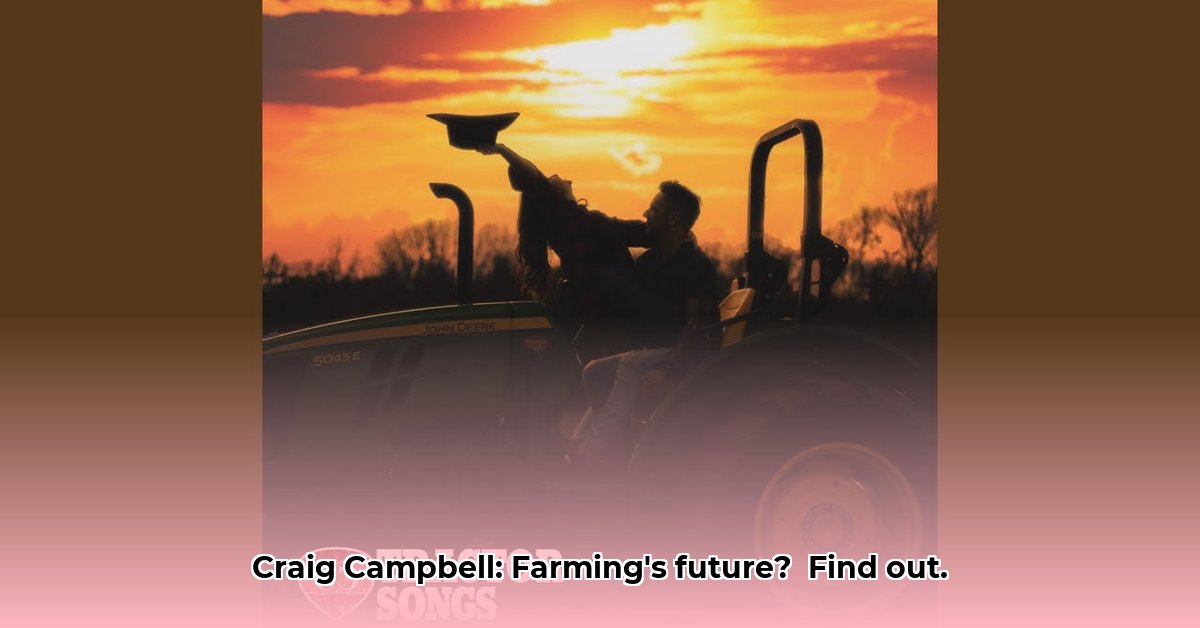
Craig Campbell's "Tractor Songs" evokes a nostalgic vision of farming life, filled with sun-drenched fields and hardworking families. This heartwarming portrayal, however, simplifies the complex realities of modern sustainable agriculture. While the song resonates with a deep-seated appreciation for agrarian life, its idealized depiction falls short of capturing the multifaceted challenges inherent in truly sustainable farming practices. This article will analyze the song’s imagery and lyrics, comparing its romanticized view with the pragmatic necessities of environmentally responsible agriculture. For more on supporting local farmers, check out this helpful resource.
A Closer Look at "Tractor Songs" and Its Messages
The lyrics of "Tractor Songs," mentioning "eighty acres," conjure images of smaller-scale farming, often associated with sustainable methods. Small farms are frequently viewed as more environmentally friendly due to their reduced reliance on large-scale industrial practices. The song also implicitly emphasizes family values and community ties—elements often linked to a more sustainable approach to farming. However, the song notably omits crucial aspects of contemporary sustainable agriculture. It lacks any mention of the technological advancements vital for efficient and environmentally responsible farming. Precision agriculture, for example, utilizes technology to optimize resource allocation and minimize environmental damage. This omission significantly diminishes the song's portrayal of modern sustainability.
The accompanying music video likely reinforces this idyllic image, focusing on the beauty of the landscape and the farmers' labor. But it likely fails to address the intricacies of soil health, pest management, and the complex economic realities faced by farmers daily. The song's charm stems from its simplicity, yet this very simplicity masks the substantial challenges of contemporary farming. Isn't it fascinating how a seemingly simple song can raise such complex questions?
Sustainable Agriculture: Beyond the Romantic Ideal
Sustainable agriculture is far more nuanced than picturesque imagery suggests. It represents a complex interplay of economic viability, technological innovation, and acute environmental responsibility. The objective is to feed a growing global population while minimizing the environmental footprint of food production. This involves adapting to climate change, improving resource efficiency, and navigating volatile market dynamics. "Tractor Songs," while emotionally resonant, glosses over these significant hurdles. It doesn't address the economic pressures, fluctuating market prices, or the constant need for technological advancements that truly sustainable farming demands. For instance, how can a small farm compete successfully in today's market without leveraging precision irrigation or data-driven decision-making? This is a question the song's idyllic portrayal neglects.
The Disparity Between Ideal and Reality
The gap between the romanticized perspective of "Tractor Songs" and the realities of sustainable agriculture is substantial. The song's idyllic representation acts as a double-edged sword. On one hand, it evokes positive emotions, fostering a connection to the land and the importance of food production. This emotional resonance is crucial in raising awareness. On the other hand, this idealized portrayal can overshadow the very real challenges farmers face; it might even discourage individuals from seriously considering the practical difficulties involved.
Addressing this gap is crucial. While we can leverage the positive emotions evoked by the song to promote sustainable agriculture, it must be done alongside an unflinching examination of the realities faced by farmers. Ignoring these challenges does a disservice to both farmers and the larger cause of sustainability.
Actionable Steps Towards a More Sustainable Future
Bridging the gap between the song's idyllic vision and the reality of sustainable agriculture demands a collaborative, multi-faceted approach. Consider these actionable steps:
For Farmers and Businesses: Embrace transparent marketing that highlights sustainable practices, connecting directly with consumers increasingly concerned about ethical and environmentally responsible food production. Investment in research and new technologies is crucial in maximizing yields while minimizing environmental impact. This encompasses everything from precision farming to renewable energy sources.
For Policy Makers: Develop and implement sound policies that actively support small-scale farmers through financial aid, educational resources, and access to cutting-edge technologies. Prioritize research and development into climate-resilient strategies. This might include funding for drought-resistant crops or innovative water management systems.
For Consumers: Support local farmers' markets and businesses that prioritize sustainable practices. Educate yourself and others about the importance of sustainable agriculture and its impact on our environment and communities. Consider the long-term effects of your consumption choices!
For Educational Institutions: Integrate sustainable agriculture into school curriculums at all levels. Develop specialized programs focused on climate-smart agriculture and precision farming techniques to equip future generations of agricultural professionals.
Conclusion: Harmony Between Ideal and Reality
Craig Campbell's "Tractor Songs" resonates with a deep-seated appreciation for rural life. To build a sustainable agricultural future, however, requires a balanced perspective embracing both the emotional appeal and the pragmatic complexities of farming. It requires a commitment to innovation, economic viability, and responsible environmental stewardship. The song provides an inspiring starting point for a broader, more inclusive conversation. The next step is collective action.